Introduction
Building your own house is one of the biggest decisions you will make in life. It is not simply about putting together bricks, cement, steel, and other materials. You are creating a space where your family will spend years together, celebrate important moments, and build lasting memories. That is why choosing the best house builders in Nagercoil requires careful thought, proper research, and a clear understanding of what makes a construction company reliable.
Many homeowners in Nagercoil and across Kanyakumari district face similar challenges when planning a new home. Some struggle to compare quotations from different builders, while others find it difficult to understand material specifications, construction methods, or the actual scope of work included in a contract. A company may offer an attractive estimate, but does it clearly explain the materials, labour, supervision, and finishing work included in that price? These are important questions to answer before construction begins.
The right house construction company in Nagercoil should help you understand each stage of the process, from architectural planning to the final finishing work. You should feel comfortable discussing your budget, asking technical questions, and reviewing progress at the construction site. Instead of choosing a builder based only on price or attractive house designs, focus on experience, construction quality, transparency, and communication. This guide explains how to evaluate your options and make a more informed decision for your future home.
Why Choosing the Right House Builder Matters
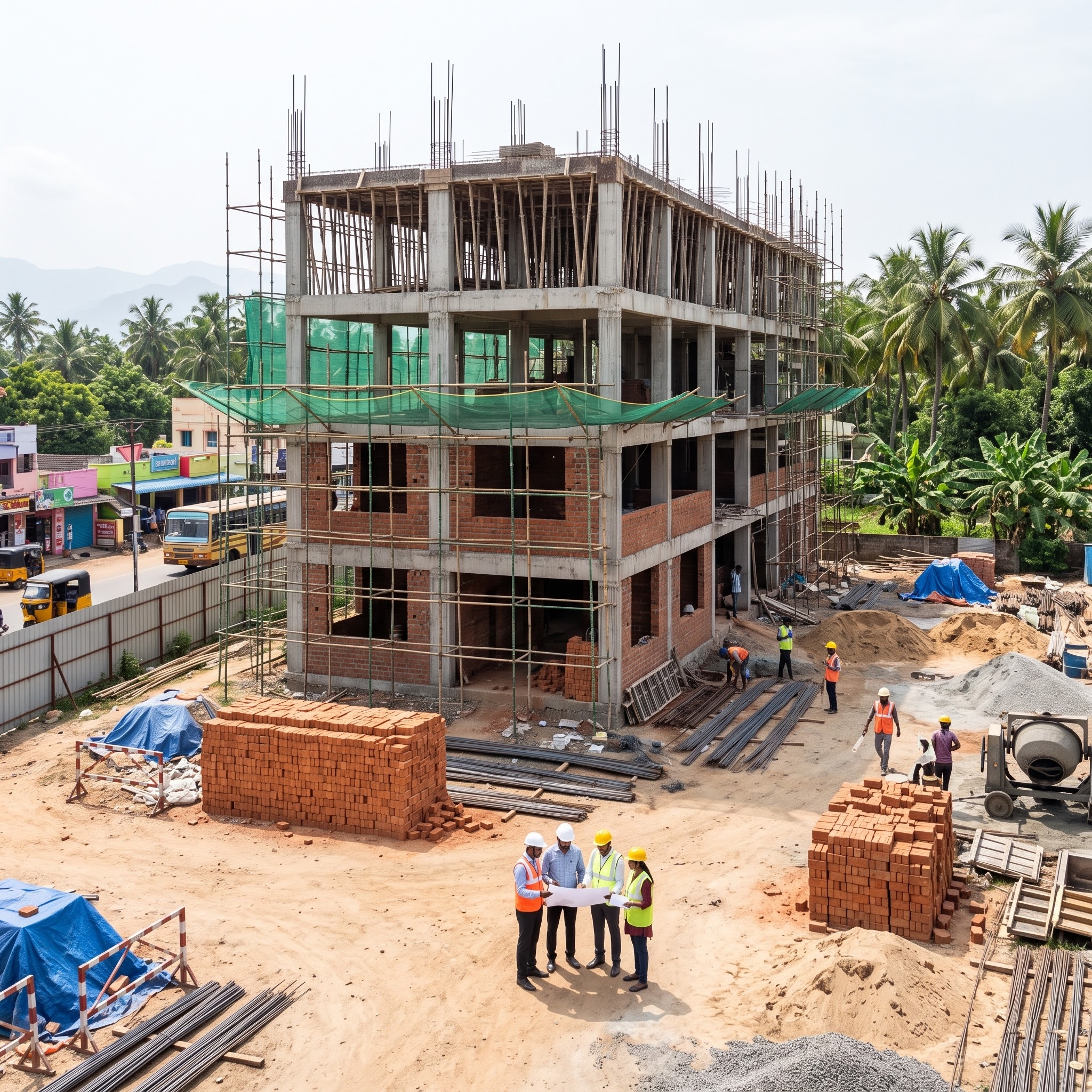
A house construction project involves several connected activities, including architectural design, structural planning, material procurement, foundation work, masonry, electrical installations, plumbing, flooring, painting, and finishing. Each stage depends on the quality of the work completed before it. If a problem develops during the early stages, correcting it later may require additional time, labour, and money. A dependable builder helps coordinate these activities so that the project moves forward according to the approved plans and agreed specifications.
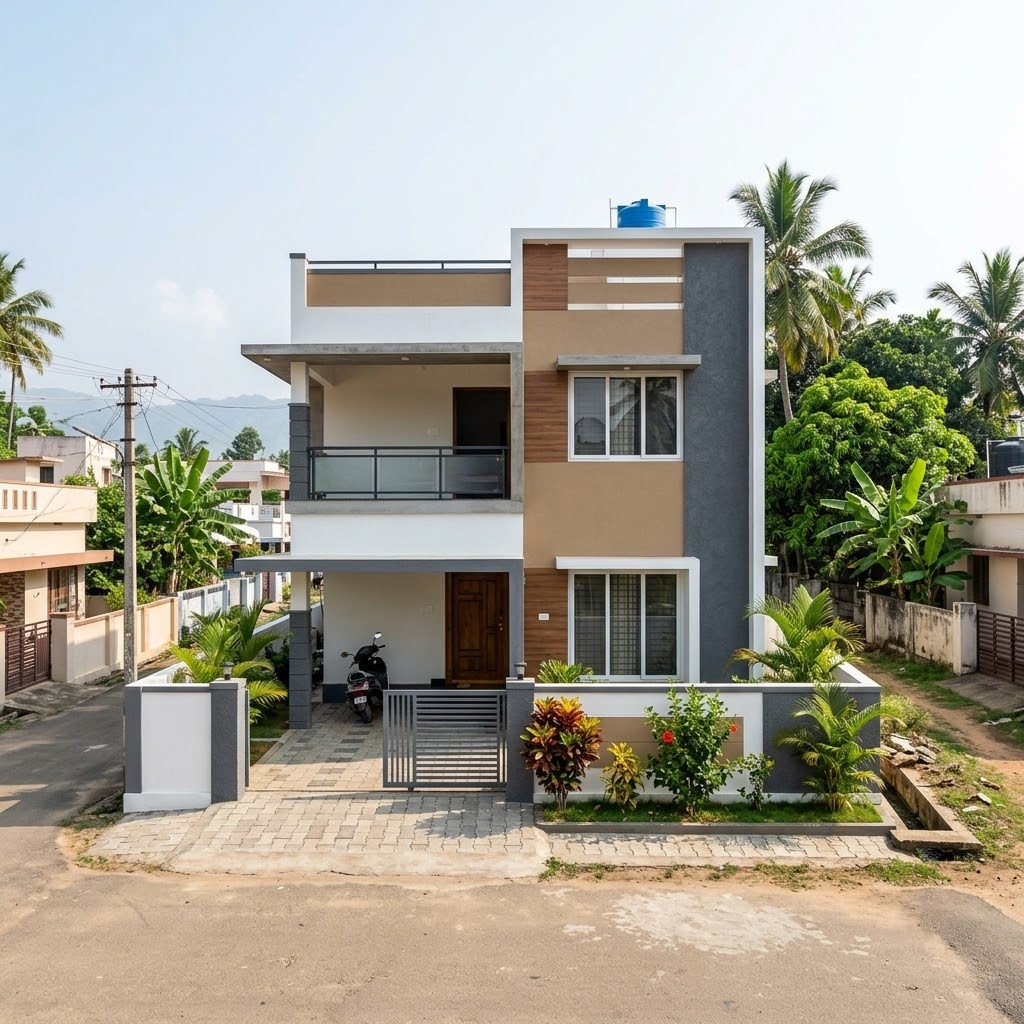
For example, consider a family planning a two-storey house in Nagercoil. The family may already have an idea of the number of bedrooms, the kitchen layout, the parking space, and the exterior elevation. However, turning that idea into a practical home requires technical planning and coordination between the people responsible for design, structural work, electrical systems, and plumbing. Without proper communication, the family may discover that a staircase occupies too much space, a room receives insufficient daylight, or electrical points are inconveniently located. These issues are easier to address during the design stage than after construction is complete.
A reliable construction company in Nagercoil also helps homeowners make informed decisions about materials and expenditure. Instead of making important choices at the last minute, you can discuss specifications, expected costs, and possible alternatives before work begins. Proper supervision can help identify deviations from drawings and agreed requirements while corrective action is still practical. The objective is not simply to complete a building but to deliver a home that meets your family’s needs, follows applicable requirements, and offers long-term usability.
7 Factors to Consider When Selecting House Builders
1. Experience and Completed Projects
Experience is a useful starting point when evaluating house builders, but it should not be the only factor in your decision. A company may have been operating for several years, yet you still need to understand the types of projects it has handled and whether its capabilities match your requirements. If you are planning a modern independent house, look for experience with similar residential buildings rather than relying entirely on photographs of unrelated commercial projects. The size, layout, structural complexity, and finishing expectations of your proposed home should influence your evaluation.
Ask prospective builders to share photographs or details of completed projects where available. If possible, arrange a visit to a finished property with the owner’s permission. Observe the visible finishing quality, the consistency of the workmanship, the arrangement of spaces, and the general condition of the building. You can also ask about the builder’s role in the project, because designing a house and executing its construction are different responsibilities. A portfolio becomes more useful when you understand what the company actually delivered.
When comparing the best house builders in Nagercoil, ask practical questions about project coordination, problem-solving, and communication. How does the company manage changes requested by the homeowner? Who coordinates workers and materials? How are construction issues reported and resolved? The answers can reveal more about a builder’s working approach than promotional claims alone.
Experience should ultimately give you confidence that the builder understands the construction process and can explain the decisions involved. Do not hesitate to request relevant information before making a commitment.
2. Construction Quality and Material Specifications
Construction quality depends on more than the visible appearance of a completed house. A smooth wall, attractive flooring, or stylish exterior elevation may create a good first impression, but the quality of the underlying structural work, waterproofing, plumbing, electrical installations, and material selection also matters. Homeowners should therefore understand what materials and methods the builder proposes to use at each stage. Clear specifications make it easier to evaluate the work and reduce the risk of misunderstandings.
Before signing an agreement, discuss the proposed grades and specifications of cement, reinforcement steel, concrete, masonry materials, waterproofing products, electrical cables, plumbing pipes, flooring, and paint. The exact requirements will depend on the structural design, building type, site conditions, and intended use. Ask whether the quotation identifies particular brands or performance standards, and clarify how substitutions will be approved. If a specified product becomes unavailable, the replacement should be agreed upon rather than selected without your knowledge.
Technical compliance is equally important. The Bureau of Indian Standards publishes the National Building Code of India, which addresses building requirements, materials, structural design, safety, construction practices, and building services. Its guidance provides a useful reference for understanding why technical planning and appropriate construction methods matter. Homeowners do not need to become structural engineers, but they should ensure that qualified professionals handle technical decisions and that the builder follows the approved drawings and relevant requirements.
Remember that cheaper materials do not always mean lower overall expenditure, and expensive materials do not automatically guarantee better construction. The important question is whether the selected materials are suitable for the intended application and are installed correctly. When evaluating the best construction company in Nagercoil, pay attention to how clearly it explains these decisions.
3. Architectural Design and Planning
A well-designed home should look attractive while supporting the way your family lives every day. Before construction begins, consider how many bedrooms you need, whether elderly family members require easier access, how the kitchen connects with dining areas, and how much storage space will be necessary. Think about vehicle parking, staircase placement, utility areas, balconies, and future changes to your family’s needs. These practical considerations should shape the architectural plan instead of being treated as minor details after the design is finalised.
Natural lighting and ventilation deserve particular attention. A house with appropriately positioned windows and openings can make better use of daylight and support airflow, depending on the site, surrounding buildings, orientation, and room arrangement. In a warm climate such as Nagercoil’s, it is worth discussing shading, window placement, roof treatment, and ways to reduce unwanted heat gain. The best solution will depend on the plot and building design rather than following one standard layout for every home.
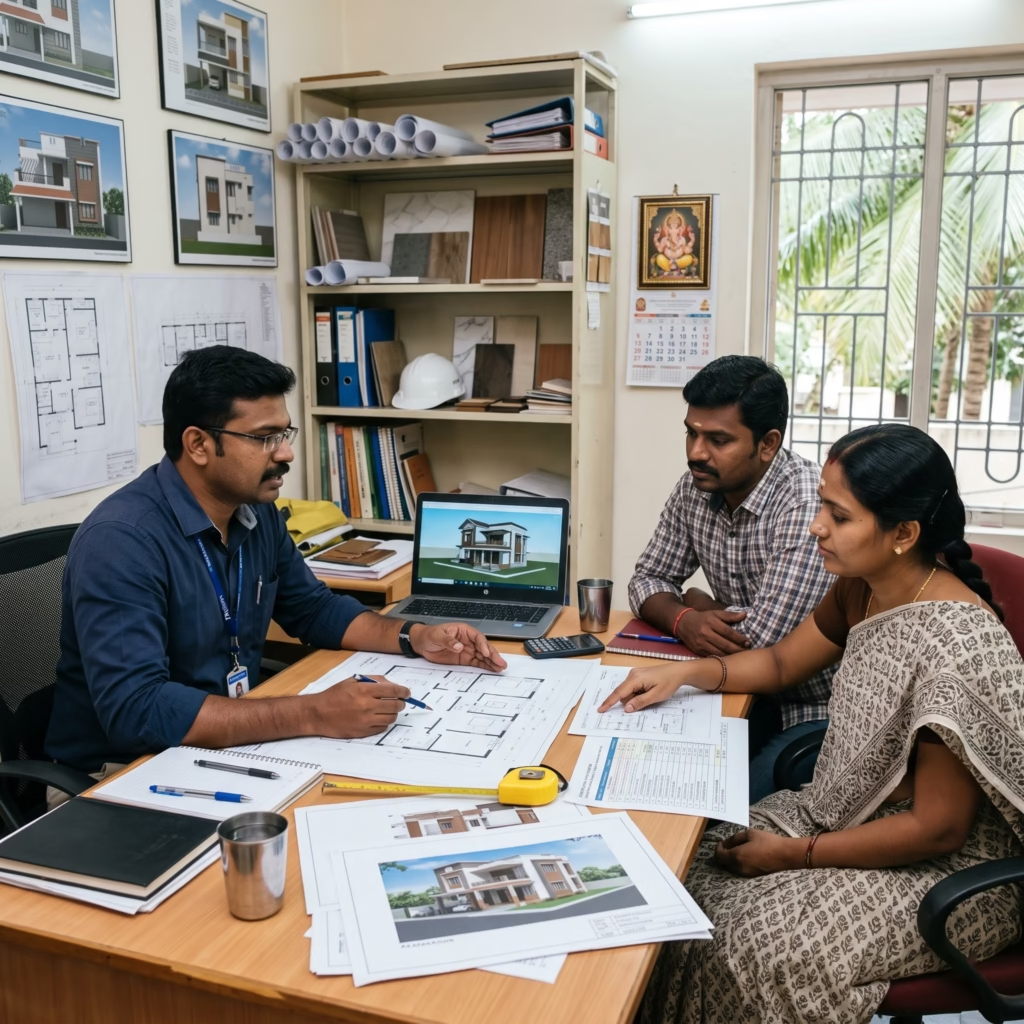
Ask the builder or design professional to explain the floor plan before approving it. You should understand room dimensions, door swings, furniture placement, movement between spaces, and the relationship between indoor and outdoor areas. Two-dimensional and three-dimensional house designs can make this discussion easier. Two-dimensional drawings help communicate dimensions and layouts, while three-dimensional views can help you visualise the exterior elevation, proportions, finishes, and overall appearance.
Do not approve a design simply because it looks impressive in a rendering. Confirm that the drawings are practical, coordinated with the structural design, and suitable for your budget and plot. If you plan to add a floor or extend a room in the future, discuss feasibility with the relevant professionals before construction. Good architectural planning can reduce avoidable changes and help you create a home that remains useful as your needs evolve.
4. Budget Transparency and Detailed Quotations
A construction quotation should explain what you are paying for, not merely display a final amount. When two builders provide different estimates, the difference may arise from material specifications, quantities, labour costs, the scope of finishing work, or items excluded from the quotation. Comparing only the totals can therefore lead to the wrong decision. A lower initial estimate may not represent better value if several necessary items must be paid for separately later.
Ask each building contractor in Nagercoil to provide a written quotation with a clear scope of work. Depending on the project, this may cover excavation, foundation work, structural construction, masonry, plastering, waterproofing, flooring, electrical work, plumbing, painting, and other agreed activities. Check whether the quotation includes architectural and structural drawings, approval-related services, site clearance, debris removal, external works, water storage arrangements, and final cleaning. If any item is excluded, request clarification about whether you must arrange it independently.
The following points can help you compare quotations:
- Structural work: Foundation, columns, beams, slabs, and specified materials.
- Masonry and plastering: Wall materials, mortar specifications, and finishing scope.
- Flooring and painting: Product allowances, material specifications, and installation.
- Electrical work: Wiring, switch points, distribution boards, and included fittings.
- Plumbing: Pipe specifications, sanitary fittings, and water supply arrangements.
- Doors and windows: Materials, dimensions, hardware, and finish.
- External works: Compound walls, paving, drainage, and other site-specific items.
- Exclusions: Items not included in the quoted amount.
- Payment schedule: Payment milestones and the work completed before each payment.
- Changes: How additional work, substitutions, and revised costs are approved.
Also clarify whether the quotation uses fixed specifications, estimated quantities, provisional allowances, or rates that may change. Ask how variations will be documented and whether you will receive a revised estimate before approving additional work. Keep a separate contingency reserve based on advice appropriate to your project, because site conditions and homeowner decisions can affect total expenditure.
Budget transparency is not about finding a builder who promises the lowest price. It is about understanding the financial commitment before work begins. A clear quotation gives you a stronger basis for comparing contractors, managing expectations, and avoiding unnecessary disagreements during construction.
5. Site Supervision and Quality Checks
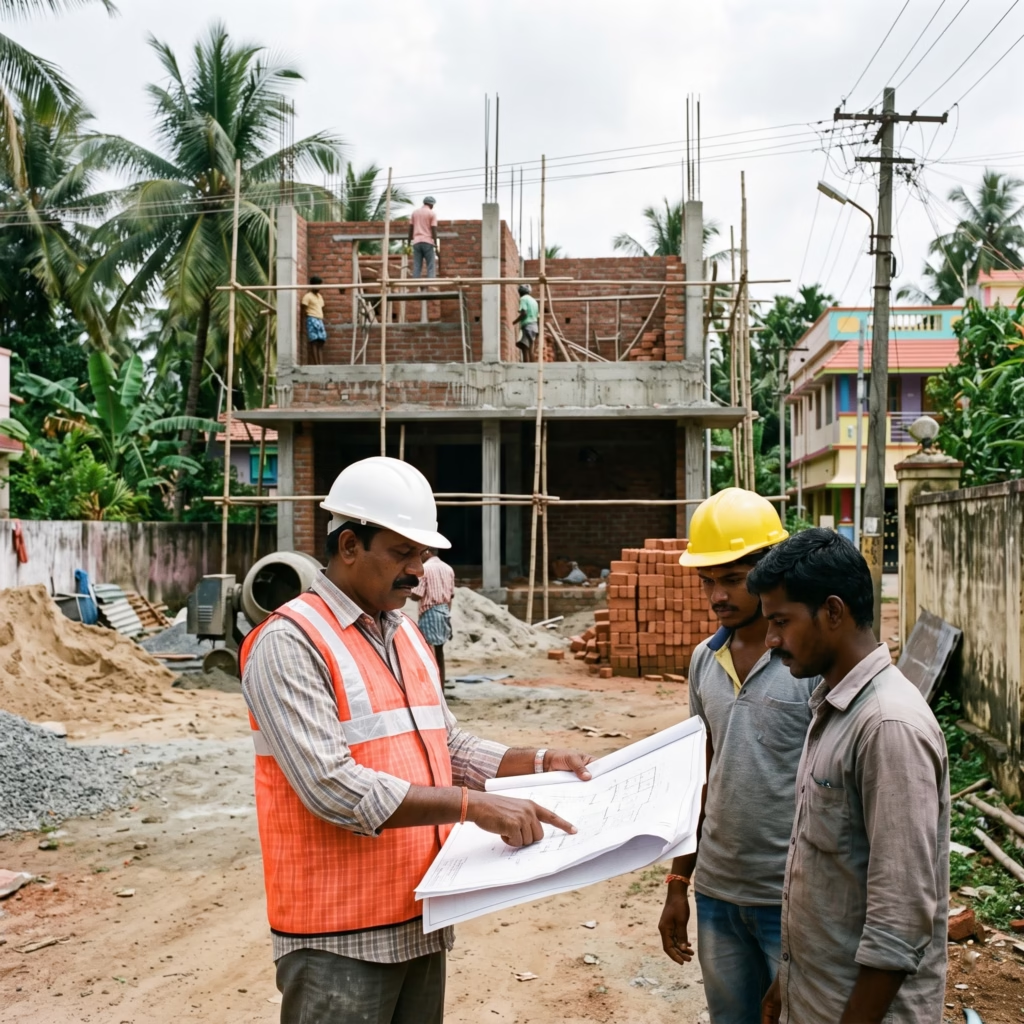
Construction supervision helps ensure that work is carried out according to the drawings, agreed specifications, and appropriate technical practices. Even when good materials are purchased, the finished result can suffer if installation is rushed or workmanship is inconsistent. Reinforcement placement, concrete preparation and curing, waterproofing, plumbing installation, and electrical work require attention at the relevant stages. Some issues become difficult or expensive to inspect once walls are closed or concrete has hardened.
Ask the builder who will supervise your project and how often the site will be inspected. Depending on the work, responsibilities may involve a site engineer, structural engineer, architect, supervisor, or other qualified professional. Clarify who can answer technical questions, approve changes, and communicate concerns to the homeowner. If the project requires specialised inspections or tests, discuss when they will take place and how the results will be documented.
A useful quality-control process includes checking important work before it is covered by the next stage. For example, plumbing lines and electrical conduits should be reviewed at the appropriate time before plastering or other finishes make access more difficult. Structural work should follow the approved engineering design, and concrete-related procedures should be managed according to the specifications and professional guidance for the project. Keep records of approved drawings, material selections, inspection notes, and any corrective actions.
For homeowners comparing the best house builders in Nagercoil, the important question is not whether a contractor claims to maintain quality. Ask how quality is checked and what records can be shared. A clear process for reporting site progress, identifying issues, and confirming corrections makes it easier to stay informed throughout construction.
6. Project Timelines and Work Coordination
Every homeowner wants to move into a new house as planned. However, residential construction involves several activities that depend on one another, and delays can occur when materials arrive late, design decisions remain unresolved, workers are unavailable, or unexpected site conditions emerge. A realistic schedule should account for the proposed building size, construction method, scope of work, approval status, weather conditions, and availability of materials and labour. A builder who explains these dependencies helps you plan more effectively.
Ask for a project schedule that divides the work into understandable stages. These may include site preparation, foundation, structural construction, masonry, plastering, electrical and plumbing installations, flooring, painting, and final finishing. The exact sequence may vary according to the design. Milestones give you a way to review progress and identify delays before they affect the remaining activities.
You should also understand how the builder handles schedule changes. If a material is unavailable or a design modification becomes necessary, who will explain the impact on cost and completion time? Will the revised schedule be documented? How frequently will you receive updates? These details are especially important if you need to coordinate rental arrangements, school schedules, a property sale, or other family commitments around moving into the new home.
Avoid choosing a contractor solely because they promise an unusually short construction period. Ask how the proposed timeline will be achieved and whether it allows sufficient time for appropriate workmanship, inspections, curing, and finishing. Reliable scheduling balances progress with the need to complete each stage correctly.
7. Written Agreements and Communication
A written construction agreement creates a common understanding between the homeowner and the contractor. Verbal discussions are useful during planning, but they may not provide enough clarity when questions arise about payment, materials, completion dates, or additional work. Before signing, ensure that the agreement reflects the quotation and the decisions made during discussions. Both parties should understand their responsibilities.
The agreement should identify the project scope, approved drawings, material specifications, payment milestones, estimated schedule, and the process for handling variations. It should also address exclusions, responsibilities for approvals, procedures for inspecting work, defect rectification, and the documentation to be provided at completion. Where appropriate, discuss how delays, disputes, and termination will be handled. If the project is substantial or the terms are complex, consider having a qualified legal professional review the agreement before you sign it.
Communication matters just as much as documentation. You should know whom to contact when you have a question, how site updates will be shared, and how quickly decisions are needed to avoid interrupting work. Keep written records of important approvals and changes, including revised costs or specifications. If you request a different tile, alter a room layout, or add an electrical point, make sure the change is recorded and its cost and schedule implications are understood.
A dependable house construction company in Nagercoil should welcome reasonable questions and explain decisions in language you can understand. Clear communication will not eliminate every challenge, but it can prevent many avoidable misunderstandings and help maintain a constructive relationship throughout the project.
Local Considerations When Building a House in Nagercoil
Choosing a builder who understands the local area can make planning and coordination easier. Nagercoil and the wider Kanyakumari district include different residential settings, plot sizes, road conditions, and surrounding environments. A house built on a compact urban plot may require different planning decisions from a home on a larger plot outside the town. Before finalising a design, evaluate the site’s physical characteristics and discuss how they may affect the construction process.
Rainfall and water management deserve particular attention. Roof slopes, rainwater drainage, site levels, external paving, and the placement of water outlets should be considered during planning. Poorly coordinated drainage can lead to water accumulation around the building or moisture problems in vulnerable areas. Discuss appropriate waterproofing measures for terraces, balconies, bathrooms, and other locations where water exposure is expected. The right solution depends on the design and site conditions, so avoid relying on a generic specification without professional assessment.
Soil conditions and structural planning are equally important. Foundation requirements should be determined using suitable site information and professional engineering judgement. A foundation that works for one plot should not automatically be copied for another property. If your site has unusual ground conditions, a significant slope, nearby water bodies, or other concerns, raise them with the relevant professionals before the design is finalised.
You should also check the building permission requirements applicable to your property. Tamil Nadu’s Combined Development and Building Rules provide the regulatory framework for relevant development and building matters, with amendments issued from time to time. Homeowners should verify current requirements with the competent authority or a qualified professional rather than assuming every house qualifies for a particular approval process.
Before construction starts, clarify who is responsible for preparing and submitting the required plans, obtaining applicable permissions, and retaining approval documents. Confirm that the proposed construction complies with the permissions and approved drawings.
Local knowledge is valuable, but it should complement technical competence rather than replace it. The right builder should understand your requirements, coordinate with qualified professionals, and explain how local site conditions influence design and execution.
Questions to Ask Before Hiring a Construction Company
A meeting with a prospective builder is an opportunity to understand how the company works. Instead of asking only about the estimated construction cost, prepare questions that reveal how the project will be planned, supervised, and documented. The answers can help you compare companies on practical criteria rather than relying on promotional promises.
Consider asking the following questions during your initial discussions:
- Can you show me completed residential projects similar to mine? This helps you assess whether the builder has relevant experience and design capabilities.
- What exactly is included in the quotation? Ask for a breakdown of the work, materials, finishing items, and exclusions.
- Who will supervise my construction site? Understand who is responsible for daily coordination, technical queries, and quality-related decisions.
- How will materials and specifications be documented? Confirm how products are selected and how substitutions are approved.
- What is the proposed construction schedule? Ask for stage-wise milestones and an explanation of factors that could affect completion.
- How are additional costs handled? Clarify the procedure for approving changes and receiving revised estimates.
- What approvals and drawings are required before construction? Establish who is responsible for each applicable approval and document.
- How will I receive progress updates? Agree on a practical method and frequency of communication.
- What happens if a defect is identified? Ask how issues are reported, assessed, and corrected under the agreement.
- Can I review the agreement before making a commitment? Ensure that you have sufficient time to understand the terms and clarify uncertainties.
You do not need to find a builder who gives the most confident answers to every question. Look for someone who responds clearly, acknowledges uncertainties, explains the next steps, and is willing to document important commitments. A professional may need to consult an engineer or review your site before giving a reliable answer. That is often more useful than receiving an immediate promise without supporting details.
After the meeting, compare the responses from each company. If one contractor provides a detailed scope and explains the supervision process while another offers only a total price, you have identified an important difference. Use that information alongside project experience, technical capability, references where available, and the written agreement.
Common Mistakes to Avoid When Choosing House Builders
One common mistake is selecting a builder entirely on the basis of the lowest quotation. Everyone has a budget, and controlling expenditure is important. However, an estimate that excludes essential work or uses unclear material allowances may not reflect the final amount you will need to spend. Before deciding, make sure you are comparing similar specifications and scopes of work.
Another mistake is approving architectural designs too quickly. Attractive exterior images can make a house look appealing, but they do not necessarily show whether the rooms are comfortable, the circulation is practical, or the design fits your plot. Spend time reviewing dimensions, ventilation, storage, parking, and future needs. Changes made before construction usually involve fewer complications than modifications made after the relevant work has been completed.
Some homeowners also overlook the importance of written documentation. They may assume that a verbal discussion is enough to confirm the type of flooring, the number of electrical points, the payment schedule, or the expected completion date. When several decisions are discussed over weeks or months, memories and interpretations can differ. Recording the agreed terms gives both parties a clearer reference.
A further mistake is ignoring construction progress because the contractor is responsible for execution. You do not need to manage every worker or make technical decisions yourself, but you should remain involved in reviewing progress, responding to decisions, and asking questions. Request updates at important milestones and ensure that necessary inspections occur before work is covered.
Finally, avoid choosing a contractor based on a single photograph, an impressive social media page, or an unverified claim. Look for relevant evidence, clear specifications, professional coordination, and a willingness to answer reasonable questions. A thoughtful selection process can reduce uncertainty and help you build a better working relationship with your chosen company.
How to Compare Construction Companies Fairly
Once you have shortlisted a few builders, use the same evaluation criteria for each one. This prevents an attractive quotation or an impressive presentation from overshadowing important differences in technical planning and project management.
The following comparison criteria can help you organise your assessment:
- Relevant experience: Examples of comparable projects and a clear explanation of the builder’s role.
- Design and planning: Practical drawings that reflect your requirements and site conditions.
- Construction specifications: Clearly documented materials, methods, and agreed workmanship standards.
- Quotation: Transparent scope, inclusions, exclusions, and variation procedures.
- Supervision: Defined responsibilities and a practical approach to quality checks.
- Scheduling: A realistic stage-wise programme and a method for communicating delays.
- Documentation: Written agreement, approved drawings, payment terms, and change records.
- Communication: Clear responses, accessible project contacts, and regular progress updates.
- Regulatory requirements: A clear approach to applicable permissions and professional responsibilities.
You can score each factor on a scale of one to five, where one means that the information is unclear or insufficient and five means that it is well explained and supported by evidence. Treat this as a personal comparison tool, not an official rating system. A builder with a slightly higher quotation may represent better value if the scope, specifications, and supervision arrangements are more comprehensive.
Before making your final decision, review the written quotation and agreement together. Check that the project scope, payment schedule, material selections, and approved drawings are consistent. If anything remains unclear, ask for clarification in writing. Make sure you understand what you are committing to before paying an advance or authorising work to begin.
Remember that the right builder is not necessarily the company with the biggest portfolio or the lowest price. It is the company whose capabilities, working process, documentation, and communication suit your specific project.
Why Consider JKJ Construction for Your Home-Building Project?
If you are planning a new house and comparing construction companies in Nagercoil, JKJ Construction is one option you can explore. The company serves Nagercoil and Kanyakumari district and provides services related to residential and commercial construction, architectural planning, building contracts, and interior design. Its service offerings also include house construction, 2D and 3D designs, exterior elevation, renovation, and remodelling.
When evaluating JKJ Construction or any other builder, start by explaining your requirements clearly. Share your plot dimensions, preferred house size, number of floors, room requirements, design preferences, and approximate budget. This information provides a useful starting point for discussing the planning and construction services your project may require.
You can also ask about the company’s approach to project supervision, material specifications, construction-stage inspections, and progress communication. Discuss the scope of work in detail so that you understand which services are included in your proposed project and which may need separate arrangements. Request a project-specific quotation and review the specifications and agreement before making a decision.
JKJ Construction highlights its experience in the construction industry and its focus on project supervision, quality checks, and planned delivery. As with any construction company, confirm the details relevant to your own project directly with the team and ensure that important commitments are documented.
To learn more about its services and discuss your requirements, visit the official website: https://jkjconstruction.in/
The purpose of contacting a builder at this stage is not to rush into a commitment. It is to understand the available options, clarify technical and financial questions, and determine whether the company’s approach matches your expectations. Taking time to evaluate these details can help you make a more confident decision about your future home.
Conclusion
Choosing the best house builders in Nagercoil involves more than comparing prices or selecting an attractive house design. You need a construction partner who understands your requirements, explains material specifications, prepares a clear quotation, coordinates the work, and communicates effectively throughout the project. These factors influence not only the construction experience but also the usability, quality, and long-term value of your home.
Before hiring a house construction company in Nagercoil, review completed projects, evaluate the proposed design, clarify the scope of work, and understand the arrangements for site supervision. Compare quotations carefully, check the applicable approval requirements, and ensure that the agreement documents important responsibilities and commitments. Do not hesitate to ask questions when a specification, payment term, or construction procedure is unclear.
Whether you are planning a compact family home, a spacious independent house, or a two-storey residence, a structured decision-making process can help you avoid unnecessary confusion. Explore suitable building contractors in Nagercoil, compare their capabilities fairly, and choose the company that best fits your project’s needs.
Your home is a long-term investment in your family’s comfort and future. Start with a clear plan, make informed decisions, and work with professionals who can explain how your ideas will be translated into a practical, well-planned building.
Frequently Asked Questions
1. How do I choose the best house builders in Nagercoil?
Start by comparing relevant project experience, construction quality, architectural planning, quotation transparency, site supervision, and communication. Ask for details of comparable completed projects and review the proposed materials and scope of work. Before making a commitment, check the written agreement and confirm the responsibilities of both parties.
2. What should I check before hiring a house construction company in Nagercoil?
Check the company’s experience, design capabilities, material specifications, project schedule, supervision arrangements, and payment terms. Make sure the quotation clearly identifies included and excluded work. You should also clarify who is responsible for the required drawings, building permissions, inspections, and documentation applicable to your project.
3. Is the lowest construction quotation always the best option?
No. A lower quotation may exclude certain finishing items, use different material specifications, or leave some responsibilities to the homeowner. Compare quotations with equivalent scopes and specifications before making a decision. The best option is one that suits your budget while providing a clear, documented plan for the work.
4. Why are 2D and 3D house designs important before construction?
A 2D plan helps you understand room dimensions, circulation, and the arrangement of spaces. A 3D design helps you visualise the exterior appearance, proportions, and proposed finishes. Reviewing both can help you identify design changes before construction begins, although structural and technical drawings are also necessary where applicable.
5. Does JKJ Construction provide house construction and design services in Nagercoil?
JKJ Construction lists house construction, building contracts, architectural planning, 2D and 3D house designs, exterior elevation, interior design, renovation, and remodelling among its services. Homeowners can visit https://jkjconstruction.in/ to explore the available services and contact the company to discuss project-specific requirements, scope, and quotations.